

 Facebook
 X
X
 Pinterest
 Copy Link
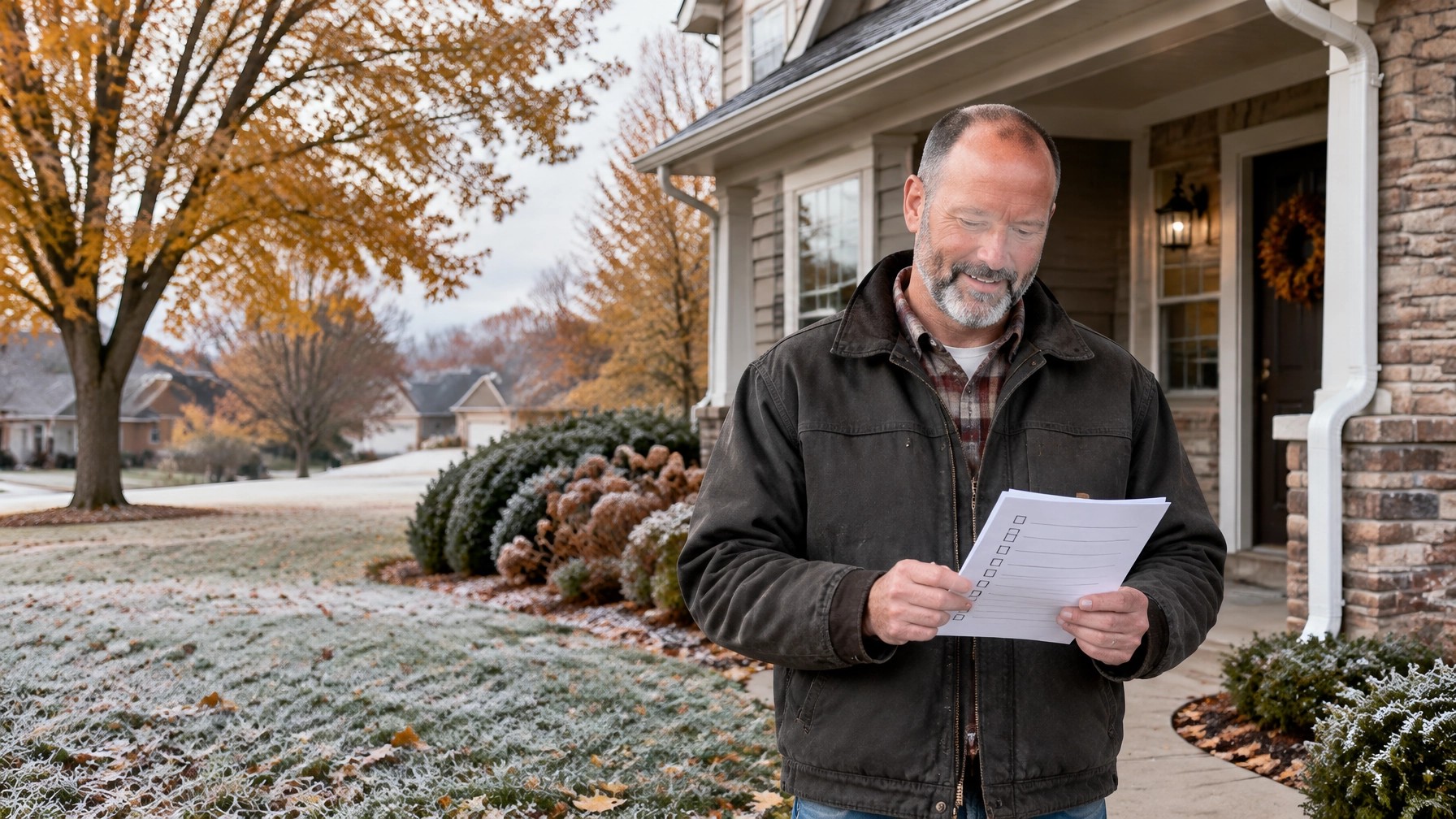
How Do You Winterize an Omaha Home Before the First Freeze?

Nebraska’s first hard freeze rarely announces itself, and this Omaha-area checklist helps homeowners prevent avoidable water, heating, and maintenance problems before cold weather arrives.
How do you winterize an Omaha home before the first freeze? Start with the water supply, exterior faucets, sprinkler system, gutters, furnace, and safety alarms. Then check for drafts, roof problems, drainage issues, and outdoor items that may be damaged by Nebraska’s wind, freeze-thaw cycles, and snow.
A few hours of practical preparation can help prevent avoidable water damage and make the first cold snap less stressful. This checklist works for homeowners in Omaha, Bellevue, Papillion, La Vista, Sarpy County, Millard, West Omaha, Elkhorn, and nearby Council Bluffs.
When should you winterize your Omaha home?
You should begin winterizing in early fall and finish before the first hard freeze. The exact timing varies from year to year in the Omaha area, so do not rely on a fixed date. If overnight temperatures are starting to approach freezing, prioritize hoses, spigots, sprinklers, and exposed plumbing.
Nebraska weather can change quickly. A warm afternoon does not mean your home is protected from a cold overnight temperature.
Start with these early-fall tasks:
- Disconnect and store garden hoses.
- Schedule a sprinkler blowout.
- Check exterior faucet shutoff valves.
- Replace the furnace filter.
- Clean gutters and downspouts.
- Test smoke and carbon monoxide alarms.
- Look for roof, flashing, and tree-limb problems.

How do you protect water pipes from freezing?
Protect pipes by removing trapped water from exterior plumbing, insulating exposed indoor pipes, and knowing how to shut off the main water supply. If a pipe is vulnerable because it runs through a garage, crawl space, or exterior wall, address that location before a hard freeze arrives.
Water damage from a burst pipe is among the most common and costly winter problems for homeowners. Much of the risk is preventable.
Exterior spigots and hoses
- Remove every hose from an outdoor faucet.
- Drain the hose before storing it indoors or in a protected shed.
- Close the interior shutoff valve if your home has one.
- Open the exterior faucet briefly to release trapped water.
- Add an insulated faucet cover if appropriate for your spigot.
Interior plumbing
- Insulate exposed pipes in crawl spaces, garages, basements, and utility areas.
- Seal drafts around plumbing penetrations.
- Open cabinet doors beneath sinks on exterior walls during an especially cold period.
- Know where the main water shutoff valve is located.
If a pipe bursts, turn off the water if it is safe to do so, then contact a qualified plumber and your insurance agent. Avoid attempting repairs beyond your experience.
Do you need to blow out sprinklers in Nebraska?
Most Omaha-area in-ground sprinkler systems should be professionally winterized before a hard freeze. A proper blowout removes water from underground lines, valves, and sprinkler heads so expanding ice is less likely to crack components. If your system has special equipment, follow the manufacturer’s instructions or ask an irrigation professional.
Before the appointment:
- Turn off the irrigation controller.
- Locate the irrigation shutoff and backflow device.
- Ask whether the contractor will service every zone.
- Confirm that the backflow preventer is protected.
- Set the controller to off or rain mode after winterization.
Do not assume that turning off the sprinkler controller removes all water from the lines. If water remains in a low spot, freeze-thaw movement can still cause damage.
How should you prepare gutters and drainage for winter?
Clear leaves and debris from gutters before snow and ice arrive, then check that downspouts move water away from the foundation. Make sure soil slopes away from the home instead of toward it. Good drainage matters in Omaha because snowmelt, rain, freezing, and thawing can repeat several times during one season.
Check these areas:
- Gutters, valleys, and downspout openings.
- Loose or sagging gutter sections.
- Leaks at seams and corners.
- Downspout extensions.
- Soil near the foundation.
- Window wells and basement stairwells.
- Sump pump discharge lines.
If your downspout empties beside the foundation, add an extension that sends water farther into the yard. If your basement has a sump pump, test it before winter and confirm that the discharge line is clear.

> “Winterizing is not about predicting every storm. It is about taking care of the small, preventable problems before the weather turns them into urgent ones.”
How do you prepare a furnace for an Omaha winter?
Replace the furnace filter, test the thermostat, and arrange a professional inspection before the first sustained cold spell. A furnace that starts normally in September may still have a problem that appears only after heavy use. Early service gives you more time to address an issue without an emergency call.
Before turning the heat up for the season:
- Install a clean filter of the correct size.
- Set the thermostat several degrees higher and confirm the furnace responds.
- Check for unusual noises, odors, or short cycling.
- Keep supply vents and cold-air returns clear.
- Remove storage, boxes, and paper from around the furnace.
- Make sure exterior intake and exhaust vents are not blocked by leaves, snow, or ice.
- Schedule service if the system has not been checked recently.

If you use a fireplace, wood stove, or other supplemental heat source, have it inspected and cleaned as recommended. Keep space heaters away from curtains, bedding, furniture, and other combustible materials.
How can you stop drafts before winter?
Stop drafts by inspecting doors, windows, attic areas, and places where pipes or cables pass through exterior walls. Replace worn weatherstripping, add door sweeps, and use exterior-rated caulk where appropriate. If warm air escapes through the attic, improving insulation and ventilation can also help reduce heat loss and ice-dam risk.
Simple checks include:
- Feel around window and door frames on a windy day.
- Look for cracked or missing caulk.
- Check that exterior doors close tightly.
- Inspect the bottom of each door for a visible gap.
- Look for light around attic access panels.
- Check plumbing, electrical, and cable penetrations for gaps.
- Confirm that attic insulation has not been compressed or displaced.
If you find extensive insulation, ventilation, or moisture problems, ask a qualified contractor to evaluate them. Small sealing work is often manageable, but attic and roof repairs may require professional judgment.
What should you check on the roof and outside of the home?
Inspect the roof, flashing, chimney, siding, and nearby trees before winter weather makes access difficult. Loose shingles, damaged flashing, blocked vents, and overhanging limbs can become more serious when exposed to wind, ice, and repeated freeze-thaw cycles.
Walk the exterior from the ground and look for:
- Missing, lifted, or damaged shingles.
- Loose flashing around chimneys, vents, and skylights.
- Cracked masonry or visible chimney deterioration.
- Tree limbs touching or hanging over the roof.
- Gaps around exterior vents.
- Damaged siding or trim.
- Cracks in driveways, walkways, and steps.
Do not climb onto a roof if conditions are unsafe. If a limb is near power lines or a roof edge, contact the appropriate professional rather than trying to remove it yourself.
Outdoor items also need attention:
- Store or cover patio furniture.
- Clean and protect the grill.
- Drain and store hoses.
- Service the mower before putting it away.
- Store fuel only in approved containers and according to local safety guidance.
- Sweep leaves from the deck and check for loose boards.
- Put away small tools, planters, and decorations that wind can move.

What safety and insurance steps should homeowners take?
Test smoke alarms and carbon monoxide detectors, keep heating equipment clear, and review winter-related coverage questions with your insurance agent. Ask specifically about frozen-pipe coverage, requirements for maintaining heat, and whether a vacant-home exclusion could apply if the property will sit empty.
Safety checklist
- Test every smoke alarm.
- Test every carbon monoxide detector.
- Replace batteries when needed.
- Keep alarms near sleeping areas and on each level, following manufacturer guidance.
- Keep at least a safe clearance around furnaces, fireplaces, and space heaters.
- Have chimneys and fireplaces checked before regular use.
- Never ignore an active carbon monoxide alarm.
If a home will be vacant because of travel, estate settlement, a move, or a pending sale, contact your insurance agent before leaving it unattended. Ask:
- How does my policy handle frozen or burst pipes?
- What temperature must the home maintain?
- Does a vacant-home exclusion apply after a certain period?
- Should the water be shut off and the plumbing drained?
- What should I photograph or document before leaving?
- What should I do first if damage occurs?
Coverage depends on the policy and the circumstances. Your insurance agent is the right person to explain your policy and any requirements related to frozen pipes, vacancies, documentation, and damage claims.
If damage occurs, take photos and video if it is safe, stop additional water flow, keep receipts, and contact your insurance agent promptly. Avoid making assumptions about coverage.
What is a simple pre-winter maintenance calendar?
A practical calendar divides winterization into manageable steps instead of waiting until the first snow. Start with outdoor water systems and roof drainage, then move indoors to heating, drafts, alarms, and documentation. If a task requires specialized equipment or creates a safety risk, schedule a qualified professional.
Late September
- Remove hoses and check exterior spigot shutoffs.
- Schedule sprinkler winterization.
- Inspect roof edges, flashing, siding, and nearby trees.
- Begin clearing leaves from gutters.
Early to mid-October
- Replace the furnace filter.
- Test the thermostat and heating system.
- Check weatherstripping, door sweeps, and caulking.
- Test smoke and carbon monoxide alarms.
- Store patio furniture and outdoor equipment.
Before the first hard freeze
- Confirm exposed plumbing is insulated.
- Make sure gutters and downspouts are clear.
- Check sump pump operation.
- Review vacant-home and frozen-pipe questions with your insurance agent.
- Photograph major systems and completed maintenance.
During cold snaps
- Keep vulnerable cabinet doors open under sinks.
- Watch for frozen or blocked furnace vents.
- Check unoccupied properties as required by your insurance policy.
- Know where the main water shutoff is located.
Could winterizing help if you plan to sell next year?
Yes. Winter maintenance can also become early listing preparation because a well-maintained home is easier to evaluate, photograph, and explain to future buyers. If a move is on your mind for next year, this is a sensible season to address drainage, heating, exterior repairs, and accumulated belongings without pressure.
If you are preparing an estate, downsizing in Bellevue or Papillion, moving from Millard or West Omaha, or handling a family transition in Sarpy County, a written plan can make the work more manageable.
David Greiner, REALTOR®, helps homeowners think through practical next steps during major transitions. His background in funeral service gives him a steady hand when a home sale is connected to loss, family change, or a difficult decision. He has also received the Nebraska REALTORS® Association Mark of Excellence for five consecutive years.
A gentle next step:
- Download my Seller Guide if you may sell after winter.
- Curious what your home is worth? Use the Home Bot for a starting estimate.
- Save this checklist or forward it to a family member who is responsible for an Omaha-area home.
What winterization questions do Omaha homeowners still have?
Most winterization questions come down to timing, water, heat, and responsibility. If you are unsure whether a pipe, sprinkler system, furnace, or vacant property is prepared, address the uncertainty before the weather becomes severe. When a task involves insurance, gas, electrical work, or dangerous access, ask the appropriate professional.
Should I leave a faucet dripping during a cold snap?
A slow drip may help protect vulnerable plumbing during an extended freeze, especially on an exterior wall. It is not a substitute for proper insulation or winterization. Ask a plumber if you are unsure which fixtures or pipes are at risk.
What temperature should I leave an empty home?
Do not assume one temperature applies to every insurance policy or property. Ask your insurance agent what minimum temperature and monitoring requirements apply. If heat will not be maintained, ask about shutting off and draining the plumbing.
Can I winterize my sprinkler system myself?
Some systems can be drained by homeowners, but many Omaha-area systems require a proper compressed-air blowout. If you are unfamiliar with the backflow device or zone layout, hire an irrigation professional.
What should I do if a pipe freezes?
Turn off the water if you can do so safely, open a faucet to relieve pressure, and contact a qualified plumber. Do not use an open flame to thaw a pipe. If it has burst or caused damage, photograph the area and contact your insurance agent promptly.
How do I know if my home has enough attic insulation?
Look for uneven, compressed, or missing insulation, but do not disturb hazardous materials or enter unsafe areas. A qualified insulation or energy professional can evaluate insulation depth, air sealing, and ventilation together.
Does winterizing matter if I am selling soon?
Yes. Winterizing protects the home while you own it and can reduce repair surprises before a sale. If the property will be vacant during an estate, move, or listing period, confirm the insurance requirements before leaving it unattended.
David Greiner, REALTOR®/Auctioneer
Better Homes & Gardens Real Estate | The Good Life Group
Nebraska REALTORS® Association Mark of Excellence recipient, five consecutive years as of 2026
DavidSellsOmaha.com
308-660-6472


